Laravel
React
TypeScript
SaaS
CRM
Equestrian Management
SaaS CRM and Operations Platform for Horse Farms, Breeding Centers and Riding Schools
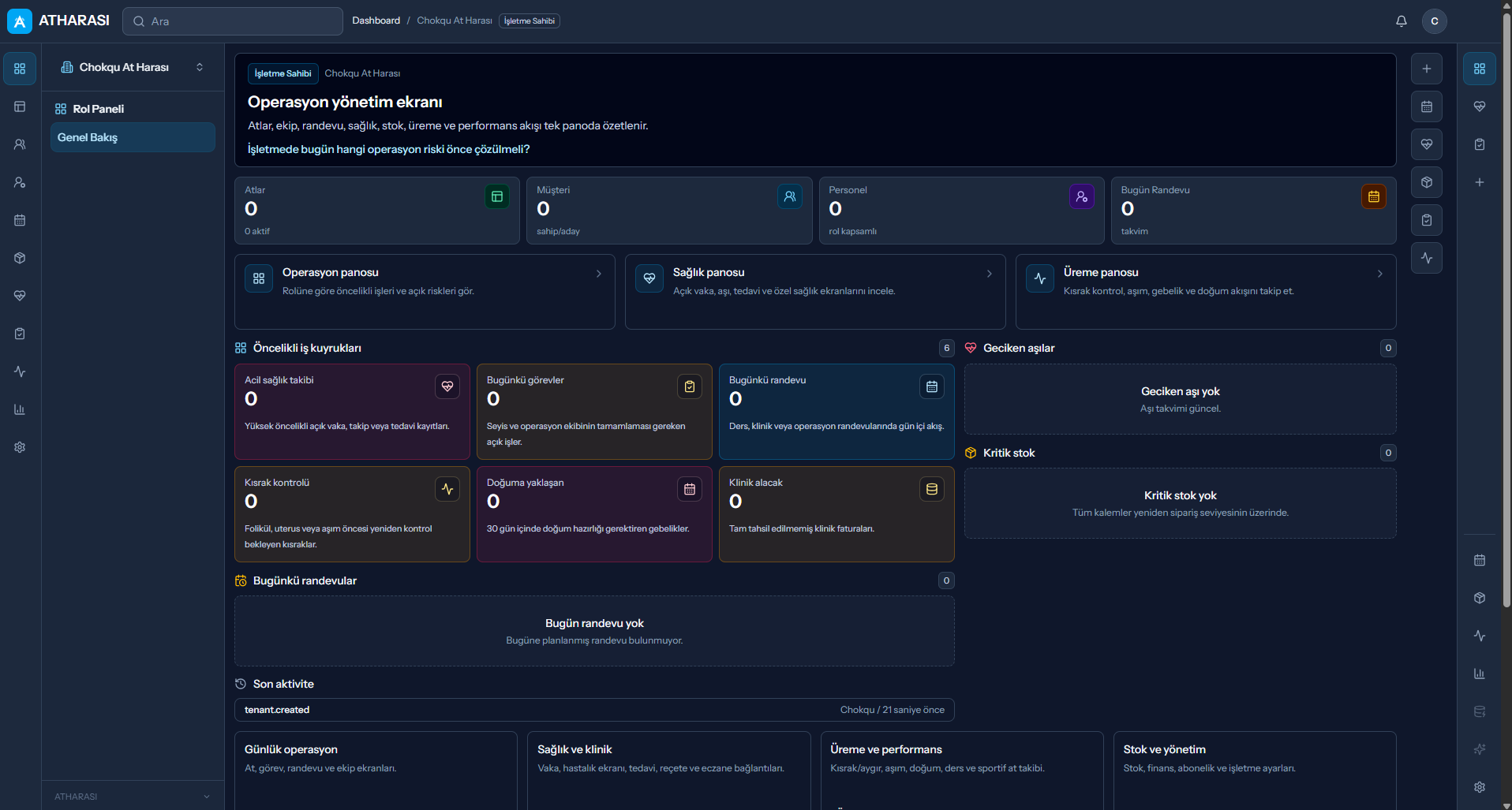
At Harası is a vertical SaaS platform I developed specifically for horse farms,
breeding operations and riding schools. The system brings animal records,
breeding management, veterinary follow-ups, inventory, lessons, customers,
staff and daily operational tasks into a single application.
Instead of adapting a generic CRM to an industry with very specific workflows,
the platform models the real entities and processes used in equestrian operations:
individual horses, lineage, breeding cycles, veterinary events, feed consumption,
riding lessons, instructors, customers and facility tasks.
The result is a domain-specific CRM and operational management system
designed to replace fragmented spreadsheets, paper records, calendar reminders and
disconnected applications with one structured source of operational information.
The Operational Challenge
Equestrian facilities manage two very different operational worlds at the same time:
animal care and business management. A single horse may have registration records,
pedigree information, vaccinations, veterinary treatments, farrier appointments,
breeding history, training schedules and performance notes.
At the same time, the business must coordinate staff, customers, riding lessons,
feed inventory, facility tasks and recurring appointments. When these records are
distributed across notebooks, spreadsheets, messaging applications and personal calendars,
important information becomes difficult to retrieve and operational dependencies are easy to miss.
Fragmented Horse Records
Medical, breeding, lineage and performance information may exist in different files
or depend on the memory of individual staff members.
Missed Recurring Tasks
Vaccinations, dental checks, farrier schedules, breeding events and other recurring
activities require reliable planning rather than informal reminders.
Disconnected Customer Operations
Riding lesson bookings, customers, instructors and horse availability need to
operate from the same scheduling context.
Limited Management Visibility
Owners and managers need a centralized view of animal care, personnel,
inventory and facility operations instead of collecting updates manually.
Complete Digital Horse Records
Horses are modeled as first-class business entities rather than generic inventory records.
Each horse can maintain its own operational history and relationships, creating a persistent
digital record that remains accessible across breeding, veterinary and facility workflows.
Identification & Registration
Central records for horse identity, registration information,
ownership context and important identification details.
Pedigree & Lineage
Parent relationships and lineage information can be associated directly
with individual horse profiles.
Breeding History
Breeding-related activities are retained as part of the animal's
long-term operational record.
Health History
Veterinary treatments, health events and recurring care schedules
can be tracked from one timeline.
Training & Performance
Training plans and performance-related information can become part
of the same persistent horse record.
Operational Timeline
Historical activities remain accessible instead of disappearing
inside isolated spreadsheets or conversations.
Breeding and Reproductive Management
Breeding operations introduce time-sensitive workflows that are difficult to manage reliably
through static records. At Harası provides a structured foundation for following breeding
relationships and reproductive events as part of the horse's wider lifecycle.
Breeding Records
Keep breeding events associated with the correct horses and timeline.
Pregnancy Follow-Up
Create a structured operational history around pregnancy-related follow-ups.
Foaling Records
Connect birth records and resulting lineage relationships to the wider horse database.
Historical Lineage
Preserve breeding history as reusable operational data instead of one-time notes.
Health, Veterinary and Preventive Care Tracking
Preventive care is inherently schedule-driven. At Harası brings recurring health activities into
the same operational system as the horse record so care history and future tasks can be viewed together.
| Care Area |
Platform Role |
Operational Value |
|
Vaccinations
|
Historical record and scheduled follow-up
|
Reduces dependence on manual reminders
|
|
Veterinary Treatments
|
Treatment and health-event history
|
Creates a more complete medical timeline
|
|
Farrier Visits
|
Recurring appointment planning
|
Improves preventive care scheduling
|
|
Dental Care
|
Visit records and future schedule
|
Keeps recurring care visible to the team
|
|
General Health Events
|
Structured health notes and history
|
Centralizes information needed during future care decisions
|
Riding School CRM and Lesson Scheduling
At Harası is not limited to animal records. Riding schools also need to manage customers,
instructors, horses and calendar capacity as interconnected resources.
The lesson and booking model brings customer-facing activity into the same platform,
creating a vertical CRM where operational availability and customer management are connected.
Customer Records
Maintain customer relationships and relevant activity within the same application
used for facility operations.
Lesson Calendar
Schedule riding lessons in a centralized calendar instead of relying on
independent staff calendars.
Horse Allocation
Connect lesson planning with the horses participating in each scheduled activity.
Instructor Allocation
Coordinate staff and customer schedules from one operational calendar.
Feed and Stable Inventory Management
Feed and stable supplies are operational resources, not just accounting entries.
Running out of a critical item affects daily care immediately, which makes stock visibility
an important part of facility management.
Feed Stock
Maintain visibility into feed quantities and frequently consumed resources.
Stable Supplies
Track operational supplies alongside the wider facility workflow.
Low-Stock Visibility
Identify inventory shortages before they become operational problems.
Centralized Operations
Keep animal, staffing and inventory information inside the same management environment.
Role-Based Team and Task Management
Facilities usually involve owners, managers, trainers, stable staff and other operational roles.
Each role needs access to different information and responsibilities.
At Harası uses role-based access and task-oriented workflows so operational responsibilities
can be assigned without giving every user unrestricted access to the entire application.
| Role Area |
Typical Access |
Control Objective |
|
Management
|
Operational overview, users, horses and facility activity
|
Centralized management visibility
|
|
Trainers
|
Horses, lessons, training and assigned operational information
|
Relevant information without unnecessary administration access
|
|
Stable Staff
|
Assigned tasks and required horse or facility information
|
Clear daily responsibilities
|
|
Administrative Users
|
Customers, lessons, bookings and permitted records
|
Separate business administration from animal-care workflows
|
Vertical SaaS Architecture
At Harası was designed as a software product for an industry rather than a custom application
for one stable. That distinction affects the entire architecture.
Facility-specific records, users, horses and customers can operate within a shared SaaS foundation,
creating a path toward repeatable onboarding, subscription packages and future modules without rebuilding
the system for every new business.
Domain 1
Horses
Profiles, lineage, breeding, health and lifecycle records.
Domain 2
Customers
CRM records, riding-school relationships and bookings.
Domain 3
Operations
Lessons, schedules, tasks and daily facility workflows.
Domain 4
Inventory
Feed and facility resources required for daily operations.
Domain 5
Team
Users, roles, permissions and task responsibility.
Why a Vertical CRM Instead of a Generic CRM
Generic CRM systems normally begin with leads, companies, contacts and sales opportunities.
Those entities remain useful, but they do not represent the most important operational relationships
inside a horse farm or riding school.
At Harası extends the CRM idea into the operational domain.
Horses, breeding records, health events, lessons, inventory and recurring care schedules
become native application concepts rather than custom notes attached to generic records.
This makes the system an example of vertical SaaS development:
common CRM and ERP principles are adapted around the actual processes and terminology of a specific industry.
Technical Scope
Laravel Backend
Business logic, domain workflows, persistence and SaaS application services.
React Frontend
Interactive operational interfaces and dashboard-oriented user experience.
TypeScript
Typed frontend architecture for maintainable application logic and UI components.
Domain-Driven Data Model
Horses, breeding, health, customers, lessons and inventory modeled as explicit business entities.
Role-Based Access Control
Permission-aware access for managers, staff and operational roles.
Scheduling & Reminder Workflows
Time-based operational workflows for care, lessons and recurring facility activities.
Inventory Management
Operational stock visibility for feed and stable supplies.
Scalable SaaS Foundation
Product architecture designed for repeatable onboarding across independent facilities.
Turning Industry Knowledge Into a Vertical SaaS Product
At Harası demonstrates how CRM and ERP concepts can be adapted to a highly specialized industry.
Instead of forcing an equestrian business into generic software terminology, the application is structured
around the actual entities, schedules and operational decisions used by the facility.
The same engineering approach can be applied to other vertical SaaS projects:
identify the industry's recurring operational workflows, define the correct domain model,
centralize the data and automate the tasks that currently depend on spreadsheets,
paper records and individual staff knowledge.
From a portfolio perspective, At Harası represents the intersection of
custom CRM development, operational ERP logic, SaaS architecture,
workflow automation and industry-specific product design.