Laravel
Livewire
TailwindCSS
E-Commerce
SEO
MCP / AI Commerce
Full-Stack E-Commerce Platform for Home Textile Retail
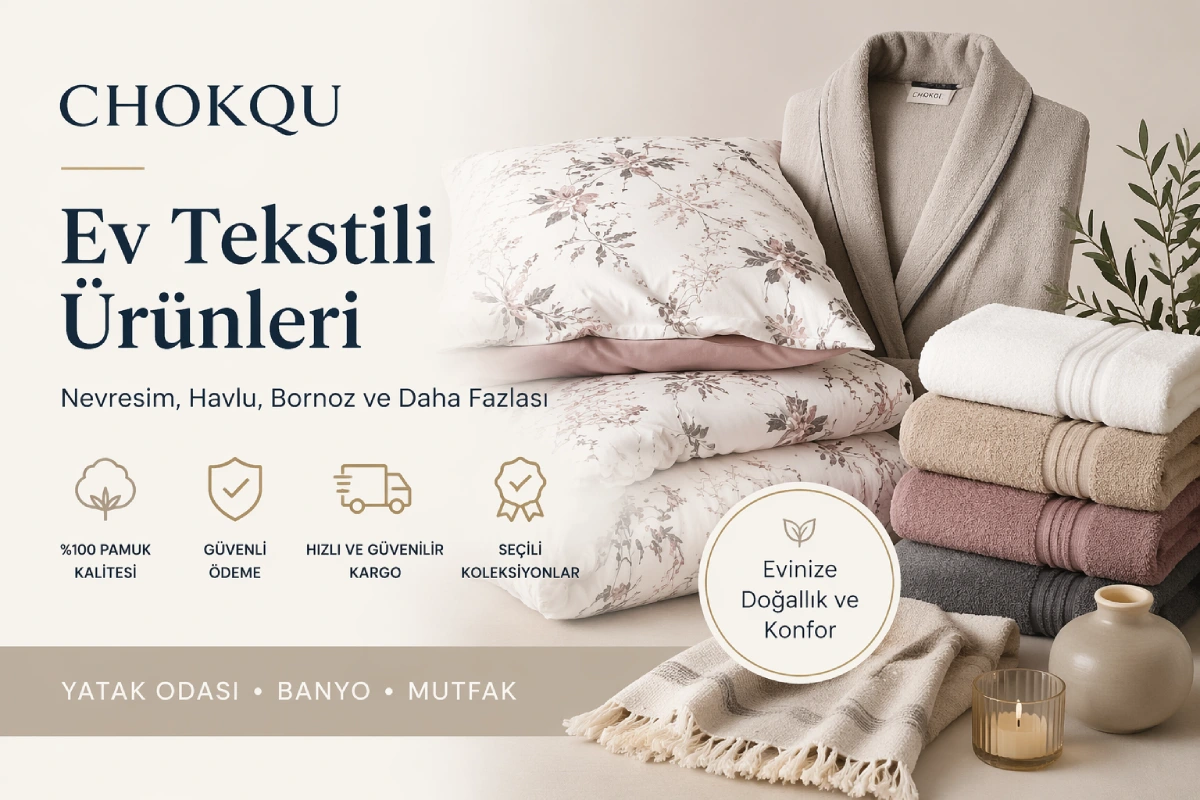
CHOKQU is a full-stack e-commerce platform I developed for online home textile retail,
covering product discovery, category navigation, pricing, stock visibility, shopping cart workflows,
customer accounts, content marketing and order-oriented customer journeys.
The application is built with Laravel, Livewire and TailwindCSS and was designed
as a real commerce system rather than a static product catalog. Products, categories, customers,
addresses, cart state and storefront content are managed through a shared application architecture
that can continue evolving as the business grows.
The project also became a practical environment for developing
SEO-driven e-commerce architecture, marketplace workflows and AI-compatible commerce APIs,
including an MCP layer that allows supported AI clients to discover products and interact with
selected storefront functions through structured tools.
The Business Challenge
A scalable online store needs to solve more than checkout. As the catalog grows, customers must be able
to discover the right product through categories, search terms, dimensions and intended use while the
application keeps stock, pricing and product visibility consistent.
Home textile retail adds another layer of complexity because products are frequently differentiated by
dimensions, fabric type, color, usage area, set composition and customer intent.
The platform therefore needed an information architecture that could serve both
transactional shopping journeys and organic search discovery.
Catalog Complexity
Towels, bathrobes, bedding, mattress protectors, sheets and other textile groups require a
category model that remains understandable as the product catalog grows.
Search Visibility
Product and category pages need to serve purchase intent while informational content captures
customers earlier in the search journey.
Commerce State
Price, inventory, cart quantities and customer state must remain consistent across dynamic storefront interactions.
Channel Expansion
The architecture needs room for marketplaces, mobile applications, APIs and emerging AI-based shopping channels.
Storefront and Product Discovery Architecture
The storefront was designed around product discovery rather than forcing customers through a single
merchandising path. Category navigation, search, featured products and product-specific pages provide
multiple entry points into the catalog.
Hierarchical Category Structure
Home textile products are organized into focused categories such as towels, bathrobes,
bedding, mattress protectors, sheets, peshtemals and kitchen textiles,
giving both visitors and search engines clearer semantic relationships.
Product Search
Search is designed to help customers reach products by product name, category, dimensions
and related product characteristics instead of depending only on menu navigation.
Pricing and Stock Visibility
Product cards expose relevant price and availability information early in the purchasing journey,
reducing unnecessary clicks before a customer decides whether to inspect or add an item.
Dynamic Commerce Interfaces
Livewire provides interactive storefront behavior for cart and product workflows while retaining
Laravel's server-side application model and SEO-friendly page delivery.
Customer Account and Shopping Journey
The customer experience extends beyond product pages.
Account, address and cart workflows provide the application state required to support a repeatable
purchasing relationship instead of treating every visit as an anonymous session.
| Customer Stage |
Platform Capability |
Business Value |
|
Discovery
|
Categories, search and featured products
|
Shorter path from search intent to relevant products
|
|
Evaluation
|
Product details, price and stock visibility
|
Better-informed purchase decisions
|
|
Cart
|
Stateful cart and quantity management
|
Controlled transition from browsing to purchase
|
|
Customer account
|
Profile and address management
|
Foundation for repeat purchasing and retention
|
|
Fulfilment
|
Payment, shipping and order-oriented processes
|
More transparent post-purchase experience
|
SEO Built Into the Commerce Architecture
CHOKQU is also an ongoing SEO engineering project.
Category pages, product pages and editorial content are structured to target different levels of search intent
instead of relying only on paid acquisition or marketplace traffic.
Product-led searches such as dimensions, fabric types and product categories can lead directly into
transactional pages, while blog content covers informational questions around bedding, towels,
bathrobes and other home textile purchasing decisions.
Category SEO
Search-focused taxonomy targeting commercial category intent.
Product SEO
Product-specific pages designed around attributes, dimensions and transactional searches.
Content Clusters
Informational guides connect early-stage search intent with commercial product categories.
Internal Linking
Relationships between editorial, category and product content strengthen discovery paths.
Multi-Channel Commerce Foundation
The brand operates across its own storefront and external marketplaces.
This makes product data consistency an architectural concern rather than a simple merchandising task.
A centralized application model creates the foundation for synchronizing products, inventory,
pricing and order-related data across channels while retaining the independent storefront as the
primary customer-owned commerce asset.
Direct Storefront
First-party customer experience, content, product discovery and conversion workflows.
Marketplaces
Additional sales channels can extend product reach while creating new synchronization requirements.
Integration Layer
APIs and background workflows provide a scalable path toward shared product, inventory and order data.
AI-Compatible Commerce Through MCP
CHOKQU also serves as a practical implementation of
Model Context Protocol for e-commerce.
A dedicated MCP server exposes selected storefront capabilities as structured tools that supported
AI clients can call without scraping the website or guessing application behavior.
This creates an additional commerce interface alongside the traditional website.
An AI assistant can work with structured categories and products and, within authenticated workflows,
interact with selected customer and cart operations using explicit application contracts.
Product Discovery Tools
Search and retrieve products through structured tool calls.
Category Discovery
Expose storefront taxonomy without depending on page parsing.
Customer Context
Authenticated tools can work with account and address context.
Cart Operations
Selected cart actions become explicit commerce functions available to compatible assistants.
The important architectural difference is that the AI interacts with
defined business functions rather than directly manipulating application data.
Authentication, product state and business rules remain controlled by the commerce backend.
Application Architecture
Layer 1
Storefront
Search, categories, products, cart and customer journeys.
Layer 2
Commerce Domain
Products, inventory, pricing, customers and cart state.
Layer 3
Background Workflows
Synchronization, queues, imports and operational tasks.
Layer 4
External Channels
Marketplaces, payment, shipping and external service integrations.
Layer 5
AI / MCP Interface
Structured tools for AI-compatible commerce interactions.
Technical Scope
Laravel Commerce Backend
Products, customers, cart state, business rules and integration services.
Livewire Storefront
Dynamic user interfaces backed by server-side application state.
TailwindCSS UI System
Responsive commerce interfaces and reusable application components.
Product & Category Model
Search-oriented taxonomy supporting catalog growth and product discovery.
Customer & Cart Workflows
Stateful customer, address and shopping-cart application flows.
Marketplace Integration Foundation
Architecture supporting product and channel synchronization workflows.
Technical SEO
Category, product and editorial architecture designed around organic acquisition.
MCP Commerce Server
Structured AI tools for product discovery and selected authenticated commerce operations.
A Commerce Platform Built Across Storefront, SEO, Integrations and AI
CHOKQU demonstrates full-stack product development beyond the visible storefront.
The project combines customer-facing commerce, product data architecture, background operations,
SEO, marketplace expansion and API-based integrations inside one evolving application.
It also provides a practical environment for exploring the next generation of commerce interfaces:
customers can continue using a conventional website while the same business capabilities can increasingly
be exposed through mobile applications, marketplaces, APIs and AI assistants.
The same architecture patterns apply to larger commerce and B2B projects where inventory,
product catalogs, customer accounts, channel integrations and operational automation must remain synchronized.